

Industrial door systems are essential components in modern facilities, supporting security, workflow efficiency, climate control, and operational safety across a wide range of sectors. From warehouses and logistics hubs to factories, cold storage buildings, loading docks, cleanrooms, and automotive plants, the right industrial door can improve productivity while reducing energy loss and maintenance costs. In today’s competitive environment, businesses rely on industrial doors not only as physical barriers but also as functional assets that influence site performance, compliance, and long-term operating expenses.
This guide provides a detailed, SEO-friendly overview of industrial door types and applications in modern industry. It explains the main door categories, common use cases, technical features, performance benefits, and specification considerations. The content is designed for use in blog posts, category pages, directory pages, and industry landing pages, with structured headings, keyword-rich terminology, and clear tables for easy scanning and search engine indexing.
Industrial doors are heavy-duty access systems designed for commercial and industrial environments where durability, speed, insulation, security, and safety are critical. Unlike standard residential doors, industrial door solutions are engineered to withstand frequent cycles, large openings, harsh environments, and specialized operational demands. They may be manually operated or automated, and they are often integrated with control systems, sensors, access devices, and building management infrastructure.
Common industrial door applications include manufacturing plants, distribution centers, logistics warehouses, food processing facilities, pharmaceutical environments, automotive workshops, aircraft hangars, agricultural buildings, and refrigeration chambers. Depending on the facility, a door may need to support high traffic flow, maintain temperature separation, resist impact, or provide rapid access for personnel and vehicles.
Choosing the right industrial door type has a direct impact on facility productivity, safety, and total cost of ownership. A poorly matched door can cause operational delays, energy loss, air leakage, safety risks, and excessive repair costs. On the other hand, a properly selected industrial door improves workflow, protects assets, supports environmental control, and contributes to a more efficient building envelope.
Industrial doors come in many formats, each designed for specific performance priorities. The most common industrial door types include sectional overhead doors, roller shutter doors, high-speed doors, fire-rated doors, sliding doors, hangar doors, cold storage doors, traffic doors, and dock doors. Understanding the differences between these categories is critical when specifying a door for a modern facility.
Sectional overhead doors are among the most widely used industrial door systems. They are made of horizontal panels connected by hinges and open vertically, then run along overhead tracks. This design saves space and allows easy access for vehicles, forklifts, and large equipment. Sectional overhead doors are commonly used in warehouses, loading bays, service areas, and production facilities.
These doors are valued for their insulation potential, structural strength, and versatility. They can be produced with steel, aluminum, or insulated composite panels, depending on the required thermal performance and durability. Optional features may include windows, pedestrian access doors, safety sensors, and automation.
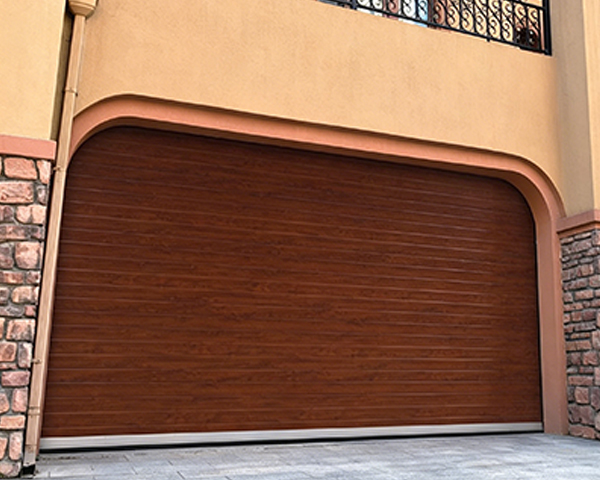
Roller shutter doors consist of interlocking slats that coil into a compact barrel above the opening. This compact design makes them ideal for facilities with limited headroom or restricted side space. Roller shutter doors are widely used in warehouses, factories, storage rooms, and access points requiring secure closure and efficient space utilization.
They are available in insulated and non-insulated versions, with finishes designed for corrosion resistance, vandal resistance, and weather protection. Roller shutter doors are often chosen for security-focused industrial applications where simple, robust operation is preferred.
High-speed industrial doors are designed to open and close rapidly, minimizing air exchange and supporting efficient traffic movement. They are commonly installed in environments where temperature control, hygiene, or workflow speed is a priority. Typical applications include food processing areas, pharmaceutical rooms, clean zones, and high-traffic logistics corridors.
These doors may use flexible PVC curtains, reinforced fabric, or lightweight rigid materials. Their main advantages include reduced energy loss, faster cycle times, improved separation between zones, and enhanced productivity. Many high-speed doors are also equipped with safety edges, motion sensors, and automatic reset systems.
Fire-rated industrial doors are engineered to help contain fire and smoke within a building for a defined period, supporting life safety and property protection. They are used in facilities where fire compartmentation is required, such as manufacturing plants, warehouses, tunnels, plant rooms, and storage areas with higher fire risk.
These doors are tested according to fire resistance standards and may be integrated with alarm systems and automatic closing devices. Fire-rated doors are typically specified based on fire rating duration, material composition, and local building code requirements.
Sliding industrial doors move horizontally along tracks and are suitable for large openings where overhead clearance is limited or where wide access is required. They are often used in hangars, agricultural buildings, logistics warehouses, and large industrial enclosures.
Sliding doors can be single-leaf or multi-leaf, manual or motorized, and built from steel, aluminum, or insulated panel systems. Their strength lies in their ability to cover very large openings while offering reliable, smooth operation and low mechanical complexity.
Hangar doors are large-scale industrial door systems designed for aircraft hangars, shipyards, and other facilities that need exceptionally wide and tall access openings. These doors are customized to fit massive clear spans and often use vertical-lift, bi-fold, sliding, or fabric-based systems depending on the structural and operational requirements.
Hangar doors must provide secure access, wind resistance, and smooth operation while accommodating frequent movement of oversized vehicles and aircraft. Their design is highly engineered and typically project-specific.
Cold storage doors are specialized industrial doors used in refrigerated and frozen environments. They are designed to minimize thermal transfer, prevent condensation, and maintain strict temperature separation. Common applications include food distribution centers, frozen goods warehouses, and pharmaceutical cold rooms.
These doors often feature high-performance insulation, heated frames, anti-frost mechanisms, and tight sealing systems. Rapid closure and frequent cycle resistance are especially important in these environments because even small gaps can increase energy costs and compromise product integrity.
Traffic doors, also known as impact doors, are built for busy internal passages where carts, trolleys, pallet jacks, and personnel pass frequently. They are commonly found in warehouses, supermarkets, food plants, and distribution areas. These doors are usually designed to swing open in both directions and return automatically to the closed position.
Impact doors are valued for their durability, ease of passage, and low maintenance requirements. They help separate work zones while allowing quick movement and reducing congestion in internal traffic routes.
Dock doors are installed at loading bays and are central to logistics, warehousing, and freight transfer operations. They work alongside dock levellers, shelters, and seals to support safe and efficient goods handling. Dock door systems may be sectional, roller shutter, or high-speed in design.
A well-designed dock door improves turnaround times, protects goods from weather exposure, and supports efficient vehicle alignment. For high-volume logistics sites, dock door reliability is a major factor in daily performance.
| Door Type | Main Function | Typical Applications | Key Advantages | Common Considerations |
|---|---|---|---|---|
| Sectional Overhead Door | Vertical opening with panel sections | Warehouses, loading bays, workshops | Space-saving, insulated, versatile | Track clearance, cycle count, insulation rating |
| Roller Shutter Door | Compact coiling closure | Storage rooms, factories, security openings | Simple design, strong security, compact headroom | Noise, speed, thermal performance |
| High-Speed Door | Rapid opening and closing | Clean zones, food plants, logistics corridors | Energy control, fast traffic flow, hygiene support | Cycle life, sensor system, maintenance |
| Fire-Rated Door | Fire containment and compartmentation | Factories, warehouses, plant rooms | Safety compliance, fire resistance, smoke control | Fire rating, certification, automatic closure |
| Sliding Door | Horizontal movement on tracks | Hangars, large enclosures, agriculture | Handles large openings, low mechanical complexity | Wall space, track alignment, sealing |
| Hangar Door | Large-format access for oversized openings | Aircraft hangars, shipyards, mega-facilities | Massive span coverage, engineered for scale | Structural design, wind load, automation |
| Cold Storage Door | Thermal separation in low-temperature zones | Cold rooms, freezer warehouses, food logistics | Insulation, energy efficiency, anti-condensation | Seal quality, heated components, cycle speed |
| Traffic / Impact Door | Frequent passage between internal areas | Processing plants, warehouses, kitchens | Durable, bidirectional, easy passage | Impact resistance, hygiene, return speed |
| Dock Door | Loading and unloading access | Distribution centers, freight terminals | Supports logistics efficiency, weather protection | Dock alignment, sealing, automation |
Industrial doors are used across many sectors, and the correct choice depends on the operational environment. Every industry has unique requirements in terms of hygiene, safety, insulation, speed, durability, and access control. Below are some of the most common industry applications for industrial doors.
Warehousing and logistics facilities rely heavily on industrial door systems for shipping, receiving, storage access, and internal traffic control. Sectional overhead doors and roller shutter doors are common at dock points, while high-speed doors are frequently installed between internal zones to reduce energy loss and speed up movement.
In logistics operations, door performance affects truck turnaround time, warehouse climate stability, and security. Doors must withstand frequent openings, accidental impacts, and continuous daily use.
Manufacturing plants require industrial doors that can manage machinery movement, production flow, and environmental separation. Depending on the process, facilities may need insulated doors, fire-rated doors, traffic doors, or heavy-duty sliding systems.
Industrial doors in manufacturing often support safety zoning, dust control, noise reduction, and equipment access. In high-volume settings, durability and low maintenance are essential.
Food processing environments require hygienic industrial door systems that support sanitation and temperature control. High-speed doors, traffic doors, and cold storage doors are especially important in these facilities.
Door selection in food industry applications often focuses on washdown resistance, corrosion resistance, rapid movement, and tight sealing. These features help preserve food safety and reduce the risk of contamination.
Pharmaceutical production and cleanroom operations require precise environmental separation. High-speed industrial doors and tightly sealed insulated doors are commonly used to maintain pressure differentials, reduce particle transfer, and support contamination control.
In these environments, door systems must be reliable, easy to clean, and compatible with controlled-access procedures. Smooth surfaces and low particle emission are often important specification points.
Automotive factories, service centers, paint booths, and assembly lines use industrial doors for vehicle access, workflow separation, and climate management. Sectional doors, roller shutters, high-speed doors, and fire-rated systems may all be used depending on the area.
In paint and finishing areas, air-tightness and fast operation are especially valuable. In workshop and service bays, door durability and daily cycle performance are top priorities.
Agricultural buildings often use sliding industrial doors, roller shutters, and large sectional doors to allow easy access for machinery, livestock, and stored products. These doors must tolerate dust, moisture, temperature variation, and intensive use.
For barns, grain storage, and equipment shelters, the main requirements are practical access, reliability, and resistance to weather conditions.
Aircraft hangars and heavy equipment facilities need large-scale industrial door solutions capable of spanning wide openings with excellent structural stability. Hangar doors and large sliding doors are typically selected for these applications.
These systems often require custom engineering to manage wind load, opening clearance, safety controls, and precise movement for oversized assets.
Industrial door systems provide a wide range of benefits that support modern operations. Whether the goal is to improve safety, reduce energy usage, or speed up traffic flow, the right industrial door can deliver measurable value.
| Benefit | Description | Relevant Door Types |
|---|---|---|
| Security | Protects assets and restricts unauthorized access | Roller shutter, sectional, dock doors |
| Energy Efficiency | Reduces heat loss, air leakage, and HVAC load | Insulated sectional, high-speed, cold storage doors |
| Speed of Operation | Improves traffic flow and lowers waiting time | High-speed, automated sectional, dock doors |
| Safety | Supports compliant and controlled facility access | Fire-rated, traffic, sensor-equipped doors |
| Durability | Handles high-cycle industrial use over time | Roller shutter, sectional, impact doors |
| Environmental Control | Maintains temperature, cleanliness, or pressure zones | High-speed, cold storage, cleanroom doors |
When evaluating industrial door types, several technical specifications should be considered. These characteristics determine whether a door is suitable for the intended application and how well it will perform over time.
| Specification | What It Means | Why It Matters |
|---|---|---|
| Door Opening Size | Width and height of the clear opening | Determines access for vehicles, machinery, or large equipment |
| Cycle Rating | How many open/close cycles the door can handle | Important for high-traffic facilities |
| Insulation Value | Thermal performance of the door panel or curtain | Affects energy efficiency and temperature control |
| Wind Load Resistance | Ability to withstand wind pressure | Critical for large exterior openings and exposed sites |
| Fire Rating | Duration of fire resistance under test conditions | Supports building safety and code compliance |
| Material Type | Steel, aluminum, PVC, fabric, composite, etc. | Influences durability, weight, corrosion resistance, and appearance |
| Automation | Motorized or manually operated control system | Improves convenience, speed, and safety |
| Sealing Performance | Ability to limit air, dust, and water infiltration | Important in cold storage, cleanrooms, and outdoor exposure |
Industrial doors are manufactured from a variety of materials, each with specific advantages. Material selection impacts strength, weight, corrosion resistance, thermal performance, and maintenance requirements.
Modern industrial door systems often include automation features that improve ease of use, safety, and operational speed. Common control options include push buttons, pull cords, remote transmitters, motion sensors, radar sensors, vehicle detectors, access keypads, interlocks, and integration with building management systems.
Automation is especially valuable in high-traffic environments because it reduces manual effort and supports consistent door operation. In addition, automation can improve hygiene by reducing contact points in food and pharmaceutical facilities.
Safety is a major consideration in industrial door design. Large and fast-moving doors can present hazards if they are not properly engineered and maintained. As a result, many systems include protective technologies such as light curtains, safety edges, emergency stop functions, obstacle detection, warning lights, and controlled closing speeds.
Regular maintenance is essential for keeping industrial doors operating efficiently and safely. A preventive maintenance program can extend the lifespan of the system, reduce downtime, and help identify wear before it becomes a larger issue.
Typical maintenance tasks include inspecting tracks, rollers, hinges, springs, seals, motors, sensors, control systems, and locking mechanisms. For high-cycle and mission-critical facilities, planned service intervals are especially important.
Selecting the best industrial door involves balancing performance requirements, budget, and environmental conditions. The following questions can help guide the selection process:
By matching the door type to the operational needs of the site, facility owners can reduce total lifecycle costs while improving performance and compliance.
| Checklist Item | Questions to Ask |
|---|---|
| Application | Where will the door be installed and what task will it support? |
| Traffic Level | How many cycles per day are expected? |
| Environmental Conditions | Will the door face heat, cold, humidity, dust, or chemicals? |
| Security Requirement | Does the facility need strong theft prevention or restricted access? |
| Thermal Performance | Is insulation or climate separation important? |
| Safety Compliance | Does the door need fire rating, sensor protection, or other certification? |
| Operating Space | Is there enough room for tracks, coils, panels, or lateral movement? |
| Maintenance Access | Can the system be inspected and serviced easily? |
For content optimization, industrial door pages often target terms such as industrial door types, industrial door applications, sectional overhead door, roller shutter door, high-speed industrial door, fire-rated industrial door, cold storage door, loading dock door, warehouse door solutions, industrial access systems, and commercial door systems. Using these keywords naturally within structured content can help search engines understand relevance while improving visibility for user-intent queries.
Industrial doors are a critical part of modern industry, supporting efficient operations, secure access, energy control, and workplace safety. From sectional overhead doors and roller shutters to high-speed doors, fire-rated doors, and cold storage solutions, each door type serves a distinct purpose in today’s industrial environments. The best choice depends on opening size, traffic volume, environmental conditions, thermal needs, and safety requirements.
For businesses and facility planners, understanding industrial door types and applications is the first step toward selecting a system that performs reliably over the long term. When properly specified, installed, and maintained, industrial doors deliver lasting value through improved productivity, lower operating costs, and stronger building performance.
```
Shenyang Manlong Metal Products Co., Ltd.


Copyright © 2026 Shenyang Manlong Metal Products Co., Ltd. All rights reserved Applications
This website uses cookies to ensure you get the best experience on our website.

 Español
 Portugues
 Pусский
 Français
 Deutsch
 العربية
 ไทย
ไทย Türk dili
 Tiếng Việt



 Phone
Phone
Comment
(0)